
Naaman almost went home a leper.
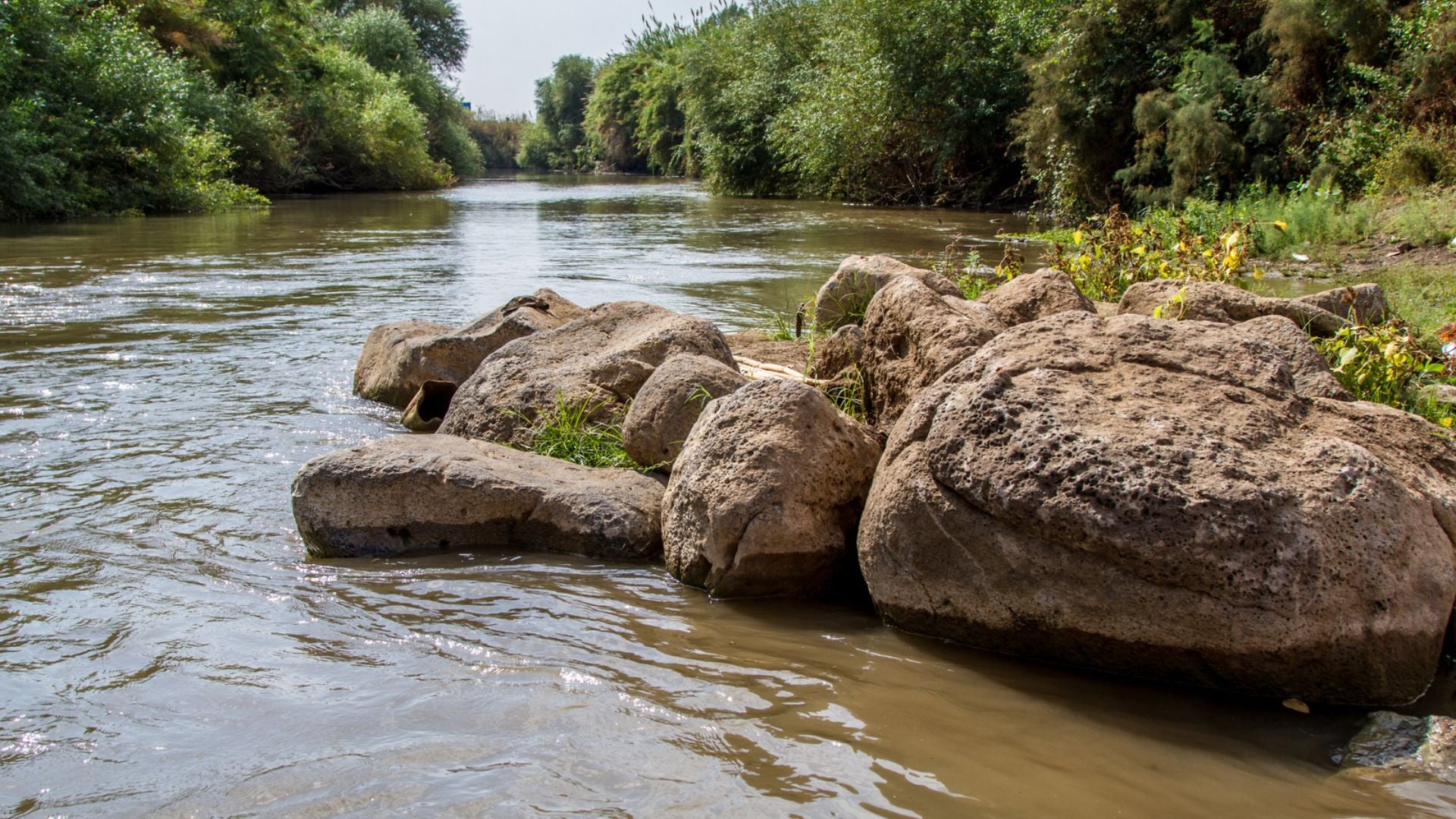
He was the commander of the armies of Syria, a great man in his master’s eyes, honorable, mighty in valor—and a leper. When the prophet Elisha sent word that he should wash seven times in the Jordan, Naaman was insulted. The Jordan? That muddy, unimpressive stream? “Are not Abana and Pharpar, rivers of Damascus, better than all the waters of Israel? May I not wash in them, and be clean? So, he turned and went away in a rage.” (2 Kings 5:12)
He was right about one thing. The rivers of Damascus were better—clearer, cleaner, more beautiful by every measure human eyes and senses would say. But the blessing was not in Damascus. Damascus was foreign soil, idolatrous soil. The blessing was in the Jordan, because that is where God said it would be. And when Naaman finally humbled himself and “dipped himself seven times in Jordan, according to the saying of the man of God,” his flesh came again “like unto the flesh of a little child, and he was clean” (2 Kings 5:14).
Years ago, one of my Andrews University professors, Dr. Duane Covrig, pointed out something I have never forgotten. Centuries before Naaman waded into that river, God stopped the Jordan’s flow so Israel could cross into the promised land. And while the riverbed was dry, Joshua did something remarkable: “And Joshua set up twelve stones in the midst of Jordan, in the place where the feet of the priests which bare the ark of the covenant stood: and they are there unto this day” (Joshua 4:9). A memorial to God’s covenant faithfulness, built into the bottom of the river itself. When Naaman went down into the Jordan, he was dipping himself over the very stones that testified God keeps His promises. The blessing for his healing was waiting at the bottom of the Jordan—not in the sparkling rivers of a foreign land. Additionally, stones represent foundation, anchoring, and are something that can be built upon.
I want to say this as plainly as I can: let us not go looking to other rivers for God’s blessing on our children.
The River God Pointed To
This is not a new idea. When Israel entered the land, God did not leave the spiritual formation of the nation to chance. Under Samuel’s direction, schools of the prophets were established—first at Ramah and Kirjath-jearim and later scattered across the country. Ellen White describes their purpose with striking clarity: “These schools were intended to serve as a barrier against the wide-spreading corruption, to provide for the mental and spiritual welfare of the youth, and to promote the prosperity of the nation by furnishing it with men qualified to act in the fear of God as leaders and counselors” (Education, p. 46).
Notice what those schools were for. Not merely academics. Not merely moral instruction. They existed to secure the mission of Israel—to raise up a generation that could carry forward what God had entrusted to the nation. Israel’s calling and Israel’s schools were inseparable. So are ours. Disclaimer: Does this focus negate quality academics? No, it actually reinforces it. We cannot proclaim spiritual depth and focus and not have excellence in all we do. The evidence of God’s work ethic and excellence is all around us in nature, despite the blight of sin. Quality and professionalism are, at times, the evidence of spiritual depth in an institution.
Our church exists to proclaim the three angels’ messages so that Christ can return. That is not institutional pride; it is the reason we have a name. And that mission cannot be finished without young people who are grounded in Scripture, formed in faith, and anchored in identity. Adventist education is the mechanism God has given us for exactly that formation. Weaken it, and we weaken the church’s capacity to finish the work.
The Fallacy of Substitute Rivers
Here is where I must challenge a quiet assumption that I believe may be taking root among us: the idea that we can make up for a child’s absence from Adventist education—that faithful family worship, church attendance, involvement in church ministries, and involvement in outreach will together accomplish what the school would have done.
I believe in family worship. I believe in the ministries of the local church. They are essential! But if home and church alone were sufficient, Ellen White would never have written this: “In localities where there is a church, schools should be established if there are no more than six children to attend” (Testimonies for the Church, vol. 6, p. 199).
Six children. Not sixty. Not a viable budget. Six. That counsel makes no financial sense—unless the school is doing something for those six children that nothing else can do…and if we understand the term, investment.
Think of it as a three-legged stool: home, church, and school, each providing congruency for a child’s development. When all three speak the same message about God, Scripture, identity, and purpose, a child’s world holds together. Remove a leg and the stool does not become a slightly shorter stool; it falls. Outside the home, the school is where a child spends more waking hours than anywhere else for twelve to thirteen years of life—ten months a year, in sustained community with mentors. In some seasons, that time rivals or exceeds time at home. Whoever holds those hours is discipling your child. The only question is toward what? The statistics are clear, the longer a child stays in Adventist education the more likely they are to stay in church.
An Honest Word
I will not pretend our schools are without challenges. They are not. We have growth to make—academically, financially, spiritually, relationally. Some of our schools are thriving; others are struggling. As superintendent of Education, I see both, and I refuse to varnish it.
However, in that same breath, I would also urge us as constituents of our Conference to stay engaged in our support and understanding of the overarching evidence of the blessing that Adventist education is in the majority of cases in the life of a child. The statistics bear that out. We should stay engaged when our churches go through difficult times and afford our struggling institutions the same support. This sentence is why:
“In the highest sense, the work of education and the work of redemption are one; for in education, as in redemption, ‘other foundation can no man lay than that is laid, which is Jesus Christ’” (Education, p. 30).
That sentence should stop us. Education and redemption—one work. When we place a child in an Adventist school, we are not making a lifestyle purchase. We are participating in the work of redemption itself.
The rivers of Damascus will always look better. They always did. But that’s human eyes and perspective, and frankly human feelings. The stones of God’s faithfulness are stacked at the bottom of the Jordan, and that is where the healing is. Let us bring our children to the river God pointed to.
Jeremy Hall, M.A., LLP, is Vice President of Education for the Michigan Conference of Seventh-day Adventists.