
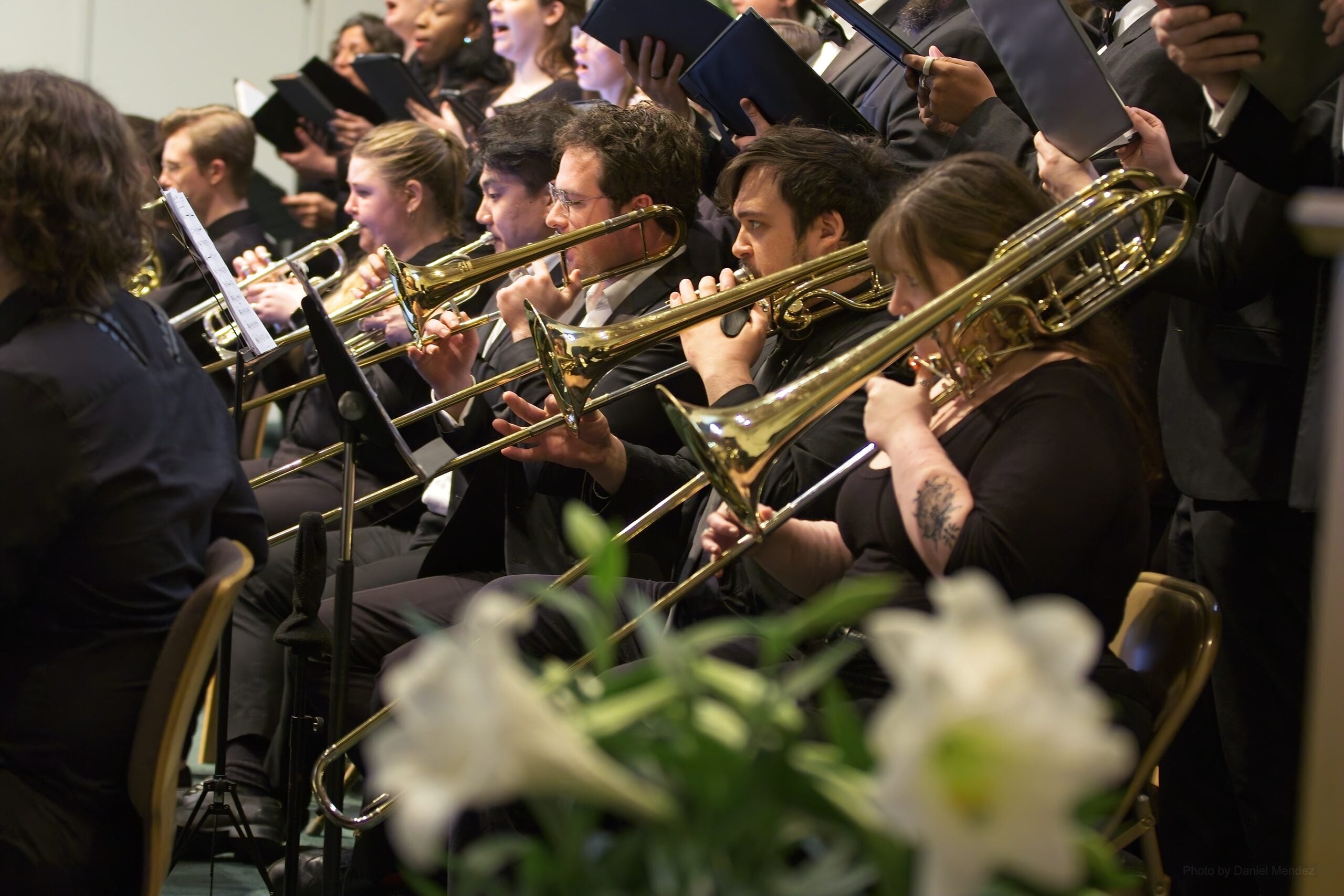
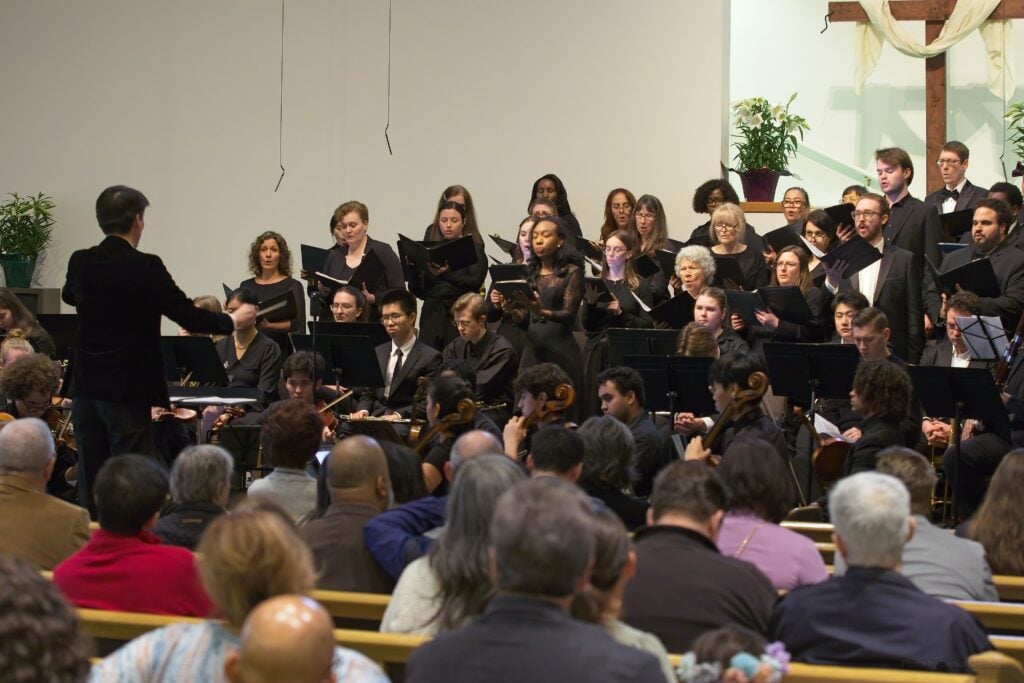
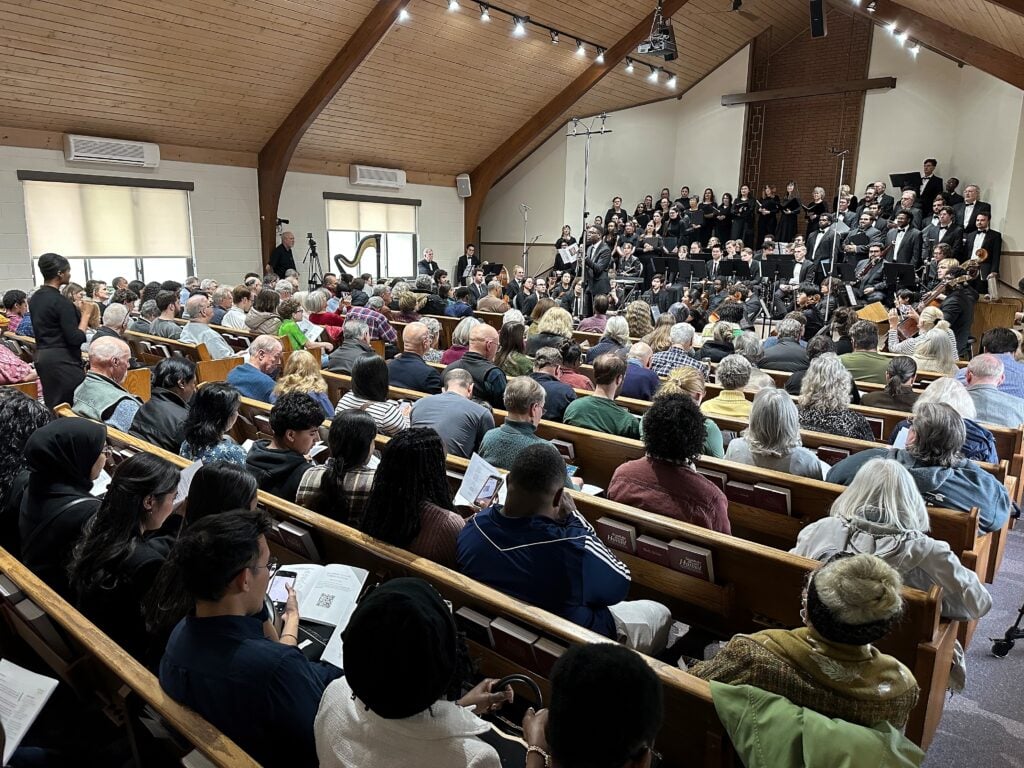
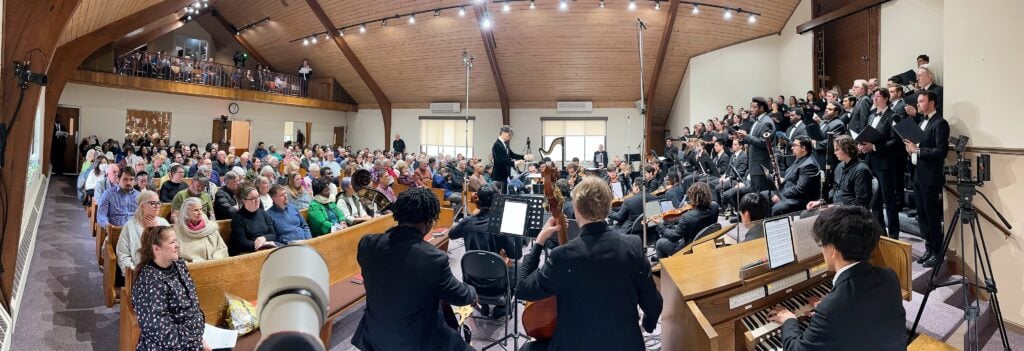
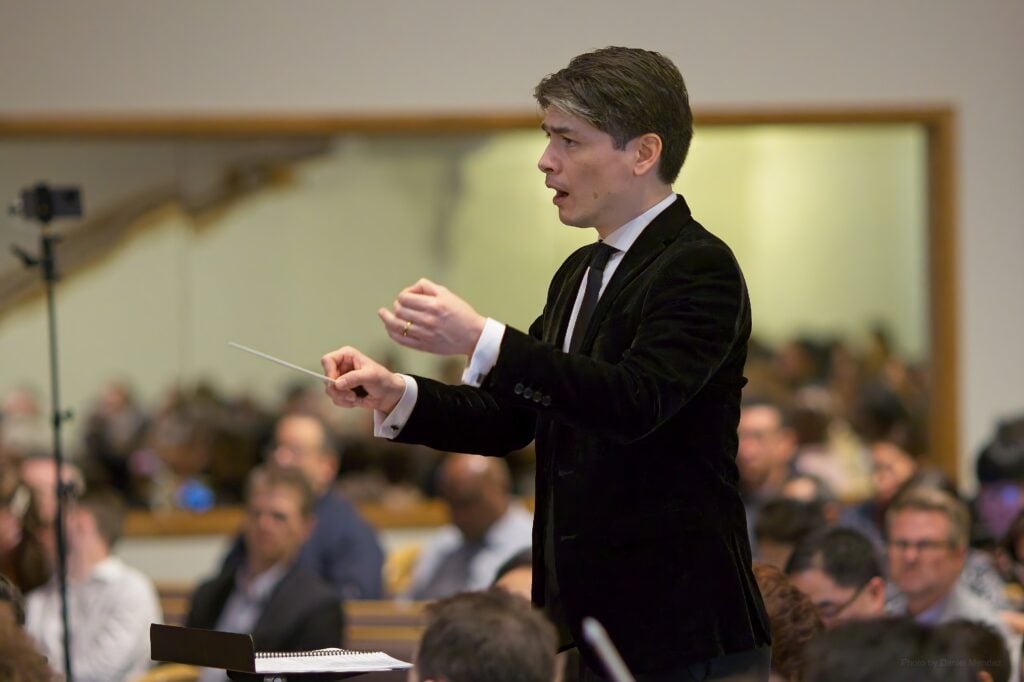
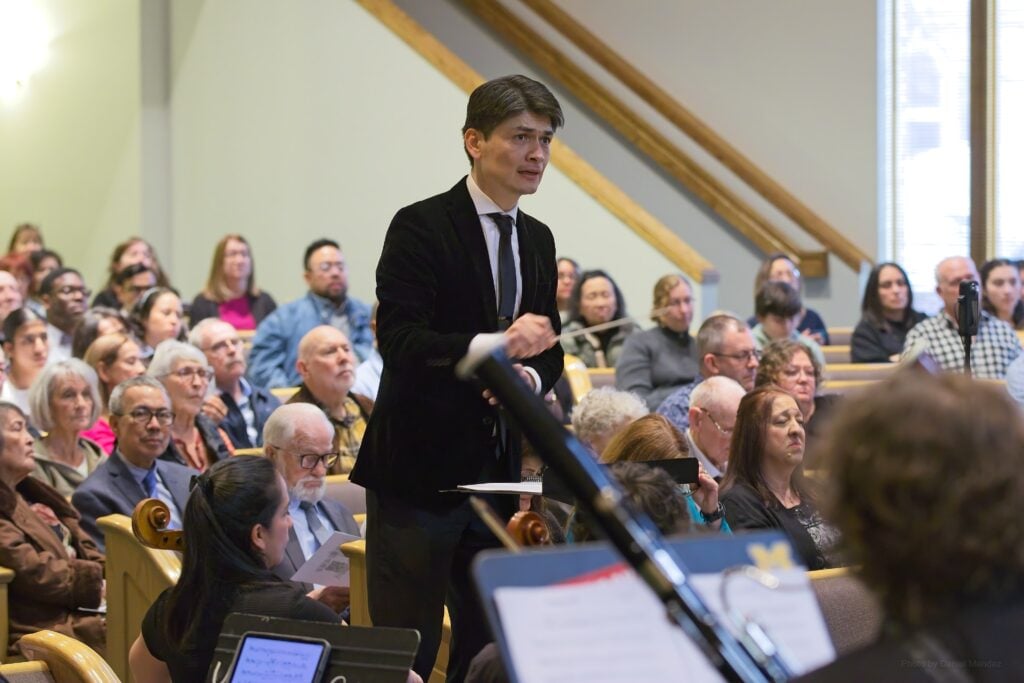
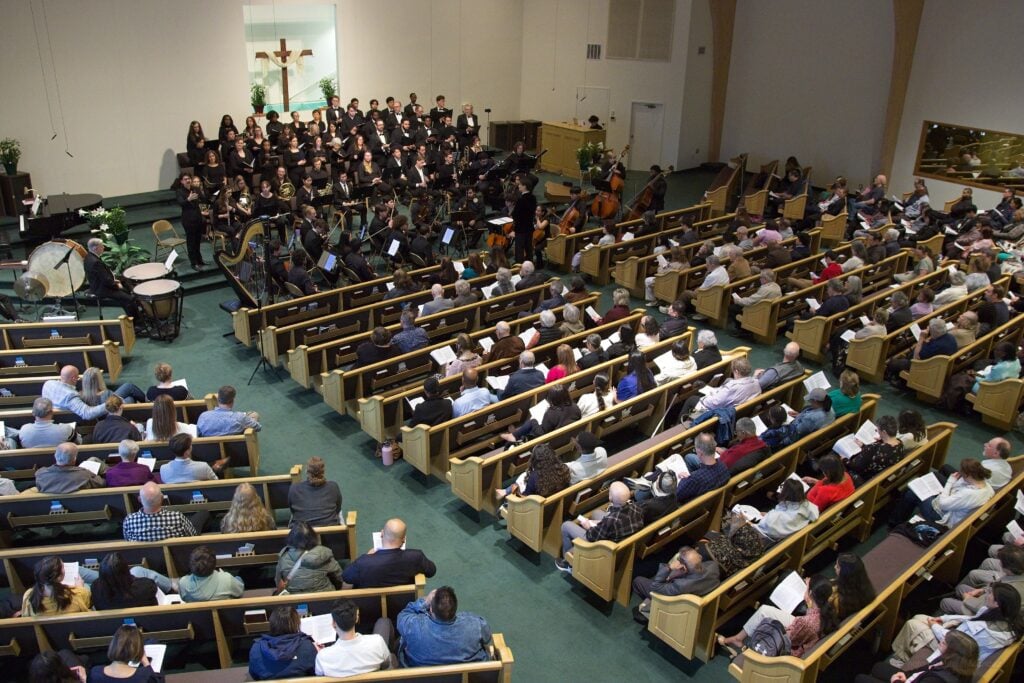
On March 29, more than 320 people filled the Ann Arbor church. Over half of them entered the space for the first time.
They did not come for a traditional service, but for a concert that told the story of Christ through sacred music. What unfolded that evening revealed something powerful: music can open doors that other forms of outreach often cannot.
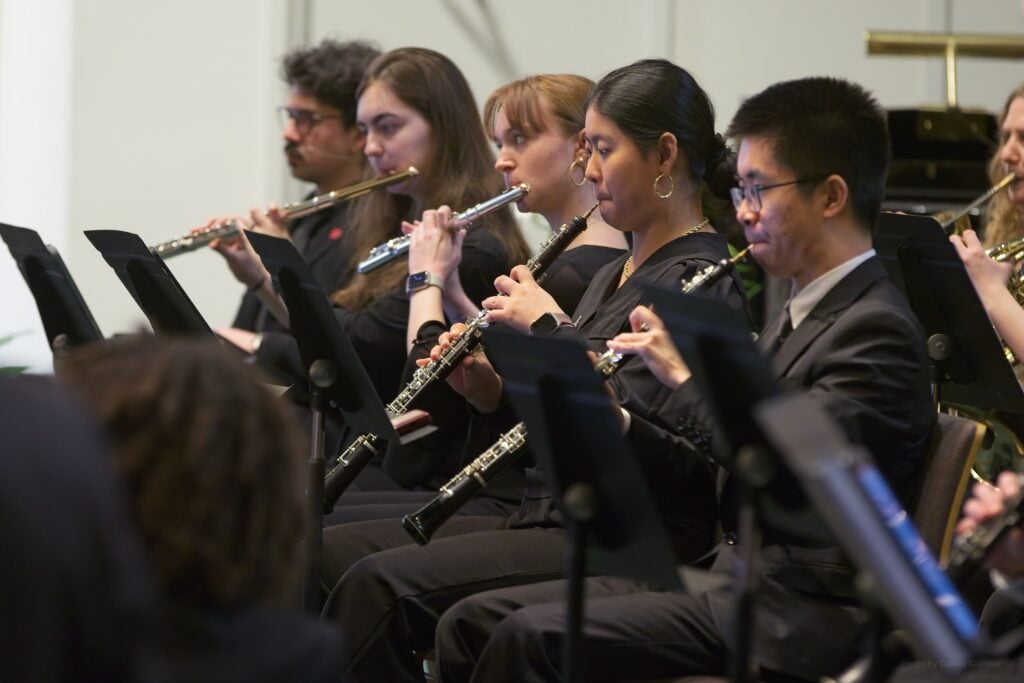
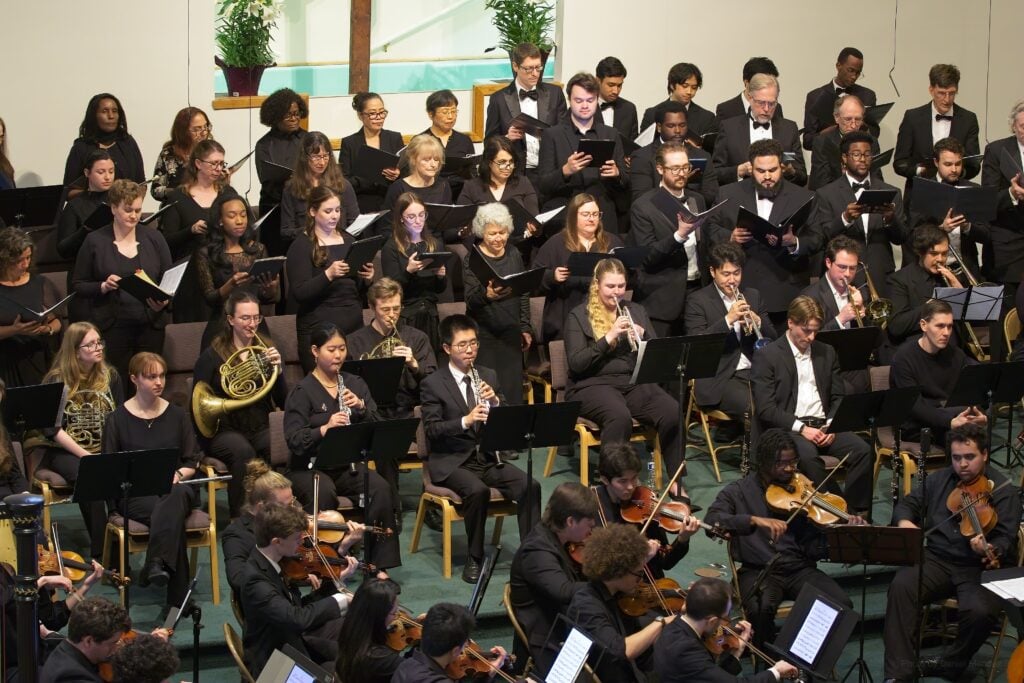
Born from a desire to reach individuals who might never attend a traditional evangelistic meeting, the Ann Arbor Community Choir and Orchestra came together with a focused purpose—to present the story of redemption through the beauty and depth of classical music, and to do so in a way that could truly be heard.
This initiative was conceived, developed, and funded by the Ann Arbor church, whose leadership and members carried the vision from beginning to end. Following a generous donation from a private donor, a second concert was presented at the Oakwood church, where both the Oakwood and Detroit Korean congregations partnered to host the ensemble and extend the reach of the ministry to a broader audience.
The project began with a simple but demanding question: how can the full story of redemption be shared in a way that genuinely resonates with those outside the church? The answer took shape through a carefully chosen sacred repertoire. Music by Gounod, Handel, Mozart, Beethoven, Stainer, and Franck was selected not only for its beauty, but for what it proclaims. Each work carried part of the narrative—moving from Creation and the Fall to the cross, the Resurrection, and the promise of the Second Coming.
The program was not a sequence of pieces, but a single unfolding journey. Scripture, along with carefully selected passages from Ellen G. White, provided the narrative thread, while the music gave voice to the weight of each moment—grief, hope, longing, and triumph. The result was an immersive spiritual experience. For many attendees, this approach created a meaningful and accessible entry point into the Christian story.
A Community Is Formed
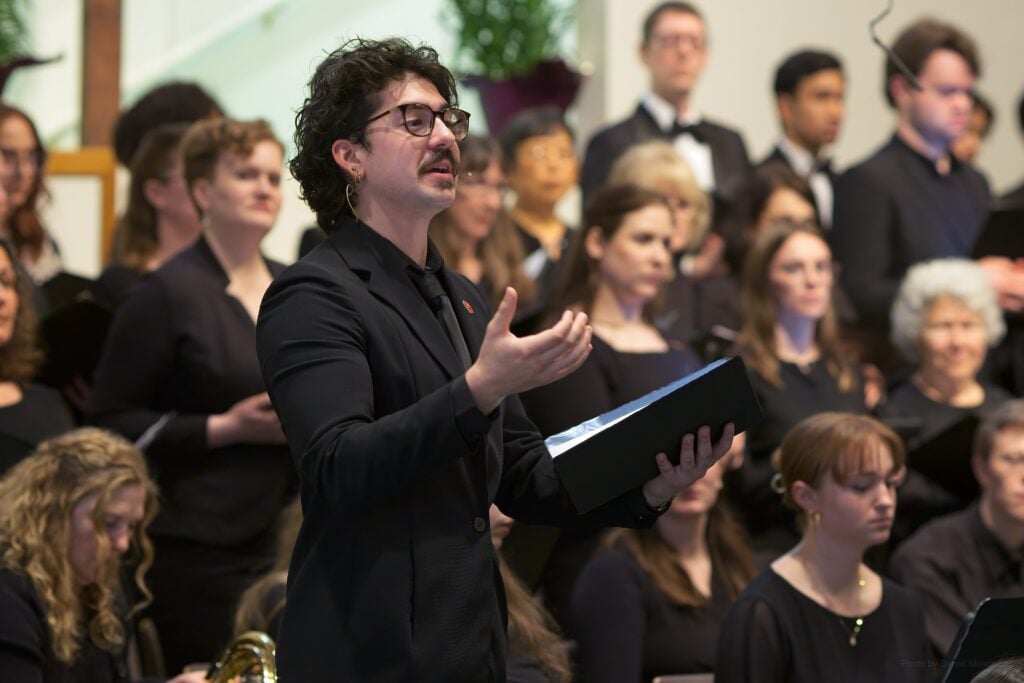
What made this initiative especially striking was the level of community involvement it generated. Over 60 percent of the 45 choir members were not Seventh-day Adventists. Participants came from a wide range of backgrounds, including other Christian traditions and individuals with no formal faith affiliation. Yet from January through March, they returned week after week, committing themselves to music that directly engaged texts from Psalms, Isaiah, 1 Corinthians, and Revelation.
The performances reflected that depth of engagement. In Ann Arbor, the sanctuary reached full capacity. In Taylor, the second concert drew approximately 450 attendees, extending
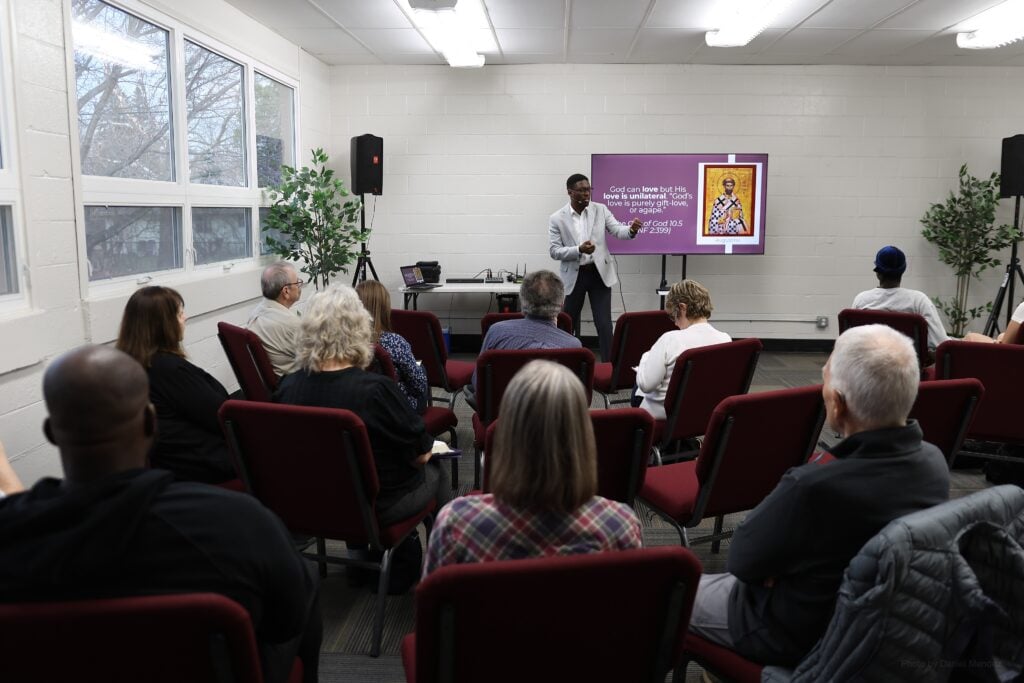
the impact even further. Between the two performances, a weeknight evangelistic series on the love of God explored foundational questions about God’s character, offering a natural and immediate next step for those who had encountered these themes through the music.
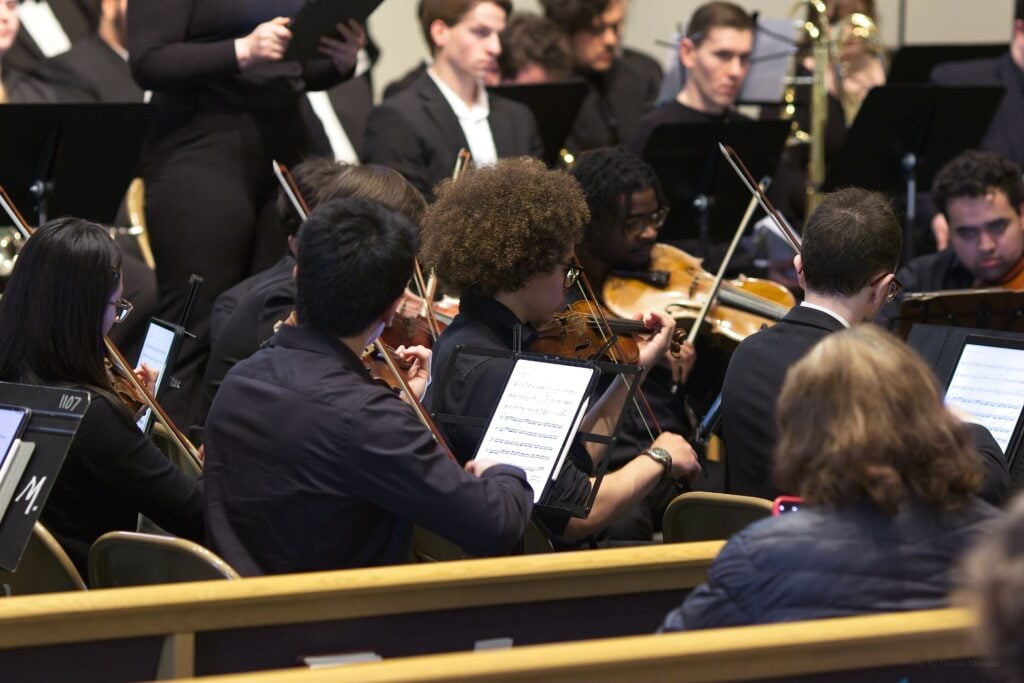
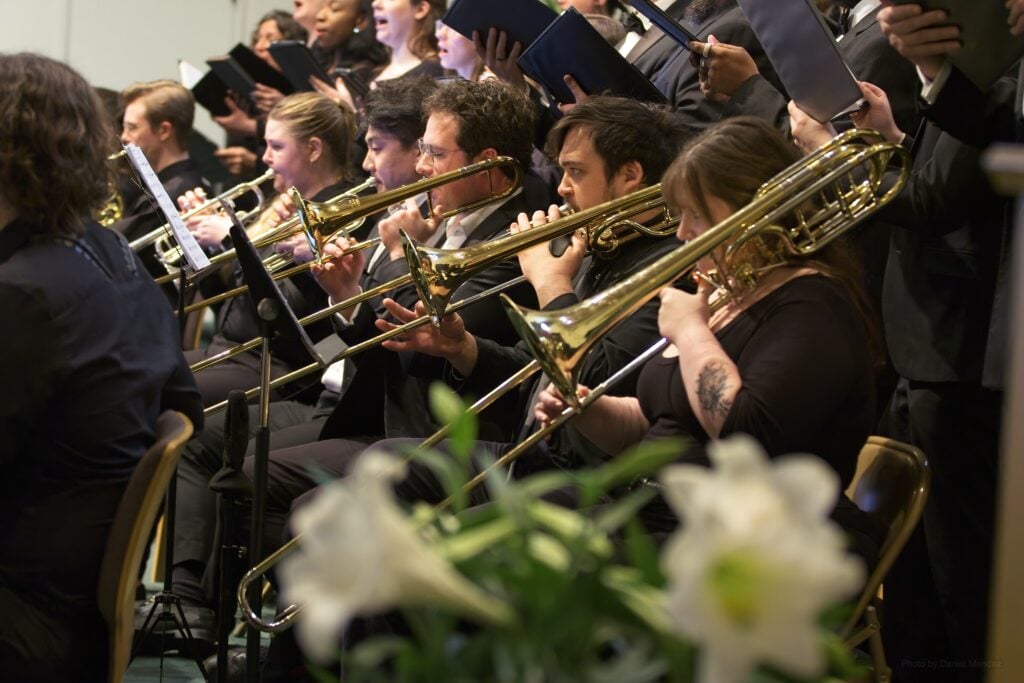
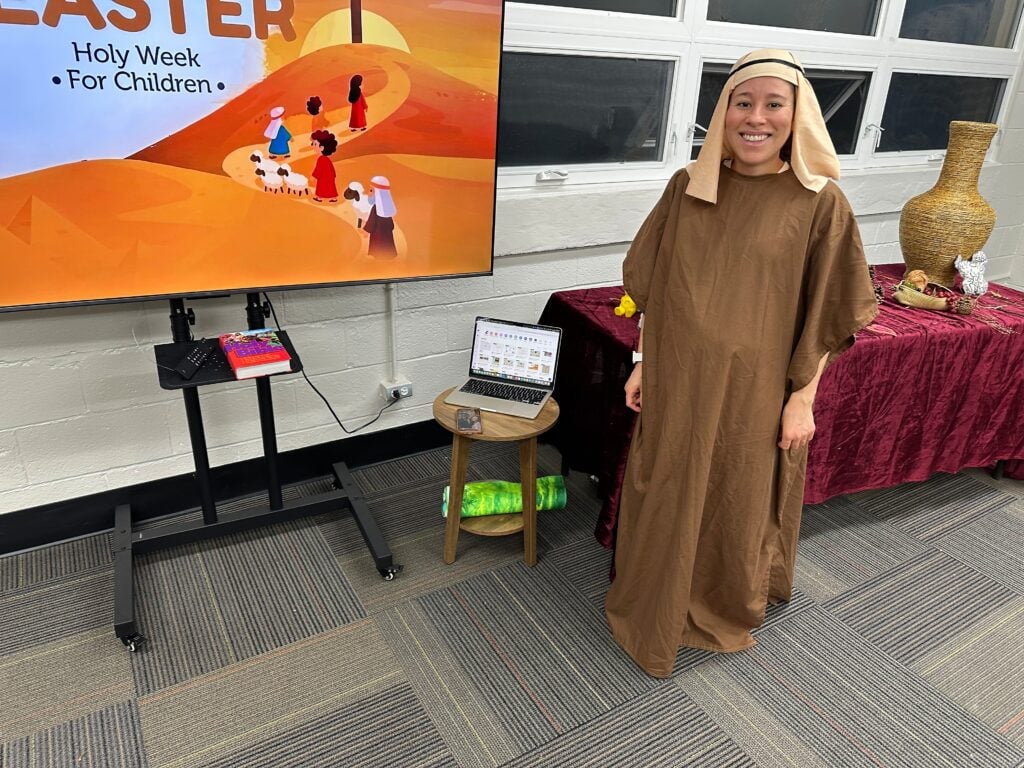
Together, these efforts became one of the most significant evangelistic initiatives these congregations have undertaken in recent years. Nearly 90 musicians were involved, and organizers Francisco Fernández and Taide Prieto contributed close to 500 hours of professional work. Their efforts included recruiting performers, shaping rehearsals, coordinating venues, and producing detailed program materials. Around them, dozens of volunteers supported the project through hospitality, logistics, children’s programming, and guest services—creating an environment where every guest felt received, not just accommodated.
Many non-Adventist choir members expressed a desire to remain involved, and organizers are already planning follow-up opportunities, including a concert watch party and continued invitations to music-centered gatherings. These are not incidental outcomes. They point directly to the central goal of the initiative which is to not simply to present a successful event, but to build an ongoing, living connection between the church and its community.
This project also signals a broader shift in how the church engages with those beyond its walls. “If we want to reach more people through evangelism, we have to think beyond what we’ve always done,” one organizer noted, “and create experiences that are meaningful and inviting to those outside our walls.”
For Ann Arbor pastor Jorge Nekeleta, the implications are clear. “We’re only beginning to understand what’s possible when music becomes the entry point for evangelism,” he said.
What took place in Ann Arbor was more than a well-attended concert. It was a glimpse of what can happen when artistic excellence, theological clarity, and intentional outreach converge. The Ann Arbor Community Choir and Orchestra is not only performing music, it is opening space for people to encounter the gospel—some for the very first time.
If you’d like more information about the Ann Arbor Community Orchestra, visit a2philharmonic.org.
Francisco Fernandez and Taide Prieto serve as the Music Ministry leadership team at the Ann Arbor SDA Church.


Photos provided by Daniel Mendez